
This time, the former national captain is planting seeds intended to outlast his own legendary playing career.
Once the firebrand leader known for his public clashes with the establishment, Taibu has returned with a notably different cadence.
The long-standing tension between Taibu and Zimbabwe Cricket (ZC)—a mix of mutual admiration and public fallout—has finally given way to a genuine reset.
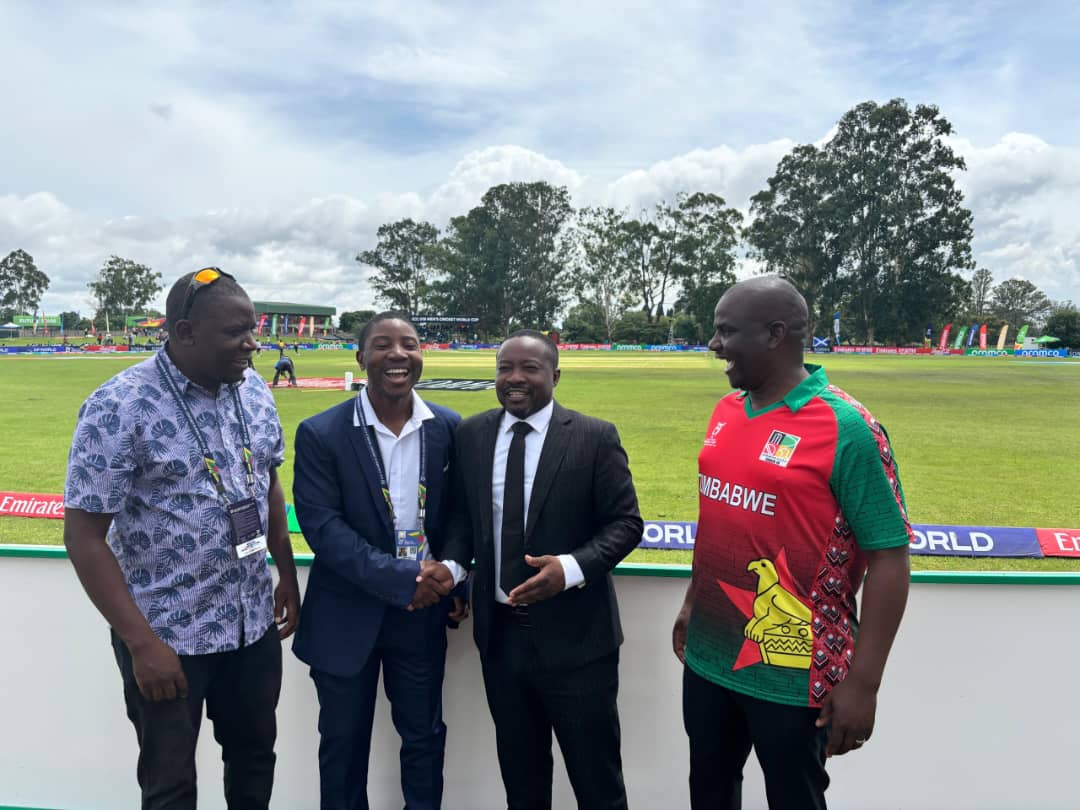
Taibu’s re-emergence as an official ambassador during the 2026 Under-19 World Cup served as a symbolic olive branch, marking a mended bridge at a critical time for the nation’s rebuilding efforts.
“I have a good relationship with ZC.
“The thing for me is that I am more mature now. Before, I was very strong in my thoughts, and I did not care who was listening and who was not. On both sides, I think there’s a bit more maturity and understanding of how life should actually go,” Taibu told Cricinfo.
A Homecoming at Takashinga
The 2026 tournament was more than a professional role; it was an emotional homecoming. Returning to Takashinga, the cradle of his career, Taibu was struck by the physical transformation of the grounds—a metaphor for how far the game has come despite its struggles.
“Being recognised is something that brings a warm feeling to the heart of anyone.
“So, obviously, it warmed my heart. But to do it in my home country, and to see the ground, Takashinga, where I grew up, to see what it has become now, how immaculate and green it was, it was heartwarming for me.”
Taibu’s perspective is rooted in the “wheelbarrow days,” a time of raw ambition and minimal resources.
“To be given any role in any industry is an honor because you are being recognised for what you have done. I am a Zimbabwean at the end of the day, and my heart is always in my country. I remember the time when we used to push the wheelbarrow when it was just a dusty field… To see the greenery like that now was great.”
Beyond the City: The Murewa Project
Taibu is now pivoting from nostalgia to construction. His latest mission takes him to Murewa, where he is establishing a sports facility designed to provide rural children with the same opportunities usually reserved for urban elites.
For Taibu, Murewa is more than a location; it is his kumusha (rural home).
“My father was from Malawi, then settled here and married my mother, who is from Mutare. Then I married my wife, Loveness, who is from Murewa. I thought to myself that I did not have a rural area where a Taibu ‘belongs.’ Because my father came through Murewa and my wife is from Murewa, that is the reason I chose the area to be my rural home.”
The project in Mashonaland East represents a shift in scale for Taibu’s philanthropy. While he has previously donated kits and equipment, this is a structured, long-term investment in infrastructure.
“Murewa is my kumusha, so you cannot build someone else’s home without building yours first. That is why I am doing those projects in Murewa. We are about to construct a sports facility there to provide an opportunity that is rare for the rural child, while we spread the game to every corner of the country.”
Eyes on 2027: The Big Picture
The timing of Taibu’s return is strategic.
With Zimbabwe preparing for the 2027 World Cup, the need for modernized facilities and a deeper talent pool has moved from “ideal” to “urgent.”
Taibu is already looking toward high-level collaborations, including recent talks with Harare Mayor Jacob Mafume.
“When I met the Mayor, we talked about doing something big. I was just interested in finding someone who is willing to join hands, definitely, something big will be looming in the few years to come.”
While the former captain acknowledges the visible progress in pitches and infrastructure, he remains adamant that the resurgence will only last if the foundation is reinforced.
For a player who famously walked away from the crease at the peak of his powers, this return isn’t about rewriting his own history—it’s about ensuring the next generation of rural talent doesn’t have to fight the same uphill battles just to be seen. (Herald/Game-ON Reporter)